I don't hide my identity as a queer, transmasc, non-binary person, but in some spaces I don't center those descriptions and most people assume I'm a straight woman.
I have two separate businesses as part of my self-employed work. Since one of these is this newsletter (to inspire less anxiety and more joy around being trans), and I post about my newsletter on LinkedIn and other social media, it's very easy to discover that I'm trans online.
(It's also very easy to see my content and ignore or not realize that I'm trans. I have received a lot of messages saying thank you for sharing an experience of being harassed as a woman with short hair, for example, from people who read my entire HuffPost article and still have no idea that I'm not a woman.)
My other business involves working on marketing, web presence, and tech for small organizations. I suspect around half of my clients have no idea that I'm trans. They call me "she" and I don't generally correct folks who are paying me.
I am grateful to be able to work for some very cool people, and it is not currently my requirement that clients use my pronouns. It's interestingly uncomfortable to push back on people's assumptions when those assumptions are the cultural norm.
Going forward, I'd like to have more of my marketing celebrate queer identities and appeal specifically to queer audiences. But I'm still in the middle of that coming out process.
--
I've been thinking a lot lately about what society allows you to call yourself. This is inspired by learning more about the Japanese language.
We only have "I" in English, but in Japanese, people can refer to themselves multiple different ways, most of which are gendered and have other connotations.
Studying Japanese as a foreigner, I learned that "I" is "watashi." Even though watashi is gender neutral, sort of, it's most commonly used by women as their full-time pronoun. When men say watashi, it's more formal, or, reads as feminine in informal situations.
So the way your "watashi" is interpreted actually depends on what gender people think you are!
Mind blown.
I am just a beginner at learning to speak Japanese, so I am likely missing a lot of nuance and cultural understanding.
Tofugu has a deep dive into Japanese first-person pronouns on their podcast which is quite fascinating. I thought it was really interesting to hear how people interpret men and women using "boku" as their pronoun. Boku is masculine, but less masculine than ore, and sounds more educated and gentler.
 Kanae Nakamine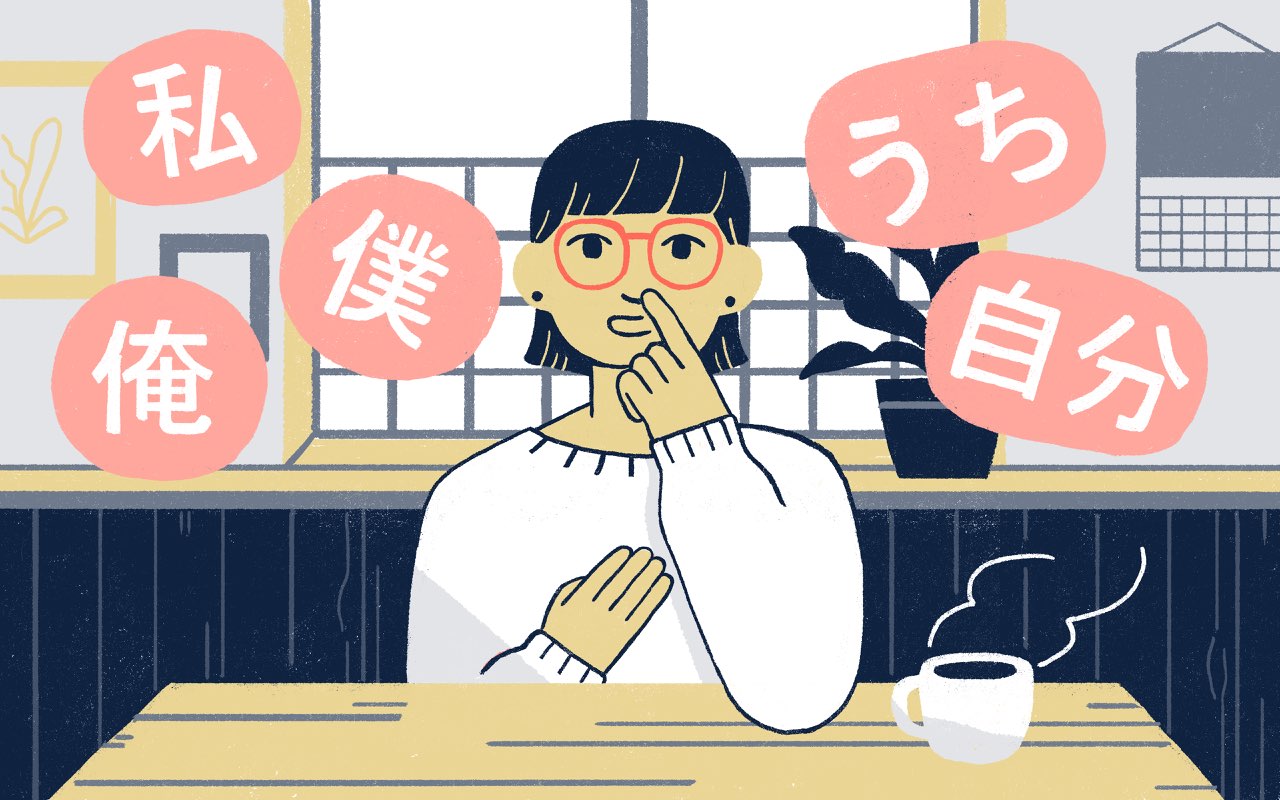
While men might be judged for using watashi instead of boku or ore, women might be judged (as anime nerds, or as weird/unconventional for using boku or ore. It's not as simple as, just refer to yourself in the way that feels right.
Then there's jibun, a pronoun that means myself, and is gender-neutral. But using jibun as "I" has some connotations that I don't fully understand. It has some associations with military speech. Men who use jibun as their pronoun might be judged negatively in this direction. However! It seems that many transmasculine people use jibun as their pronoun. Women use jibun occasionally as a gender-neutral option.
You know like when you're having an argument with someone, and you slow down and recall that there's multiple versions of what people understand?
- What you think
- What you say
- What they hear
- What they think
These can all be different, right?
A similar idea can be applied to the gendered language that you use. For example,
- I'm a transmasculine person
- I say "Boku wa aikido keiko suru." ("I practice aikido.")
- Someone hears me say "boku wa" as someone they think is a woman
- They think I have made a mistake as a beginner language learner, or I picked up a phrase from watching anime
As both a foreigner and someone who looks like a woman in Japan, I am expected to use watashi.
While I could refer to myself by other pronouns, the words are not sufficient to convince people of my gender.
But that's not unique to Japanese pronouns. English words, also, are not sufficient to convince people of my gender.
Some amount of freedom comes from this. I could speak about myself however I want, knowing it will not change the impression of most people.
But I also feel more comfortable fitting in with people's expectations, if I can. So, I describe myself and my work in gender-neutral ways, when available.
--
You may have heard recently that a MMA fighter at a White House event insulted Michelle Obama by calling her a man during his post-fight interview. This is racist and transphobic.
Pax Ahimsa Gethen wrote a great analysis from a Black trans perspective, check this out:
 Pax Ahimsa Gethen
--
Do you think society influences what words you use to describe yourself? Let us know in the comments!