As a transmasculine person, I often feel trans masc invisibility. What does that mean?
A lot of people don't know or believe that being transmasculine is a thing. So the general public tends to assume that some transmasc people are women, and for trans men with beards, etc, assume that they are cis men, not trans. Policy discussions and discourse centers around trans women, ignoring trans men for the most part.
This is in contrast to trans femme hypervisibility, as the general (conservative) public tends to be not only aware of but suspiciously looking for transfeminine traits, unfortunately.
Trans masc invisibility can be a privilege, compared with hypervisibility leading to harassment and abuse that trans women did not ask for and often cannot avoid.
It can be good or neutral to have the option to be "stealth" and not let people know you're trans.
It can be bad to not be aware of anyone similar to you or to have people not believe you are trans.
But I'm trying not to place too much of a value judgment on trans masc invisibility as I explore this common experience.
Amplify Respect needs your help!
Your financial support allows this work to continue.
If you care about uplifting and informing trans folks and allies, please contribute:
Trans masc invisibility in action
I arrive at the pharmacy wearing men's clothes, an N-95 mask, and hand over my driver's license with "Rey Katz" as the name and an "X" as my gender marker.
"Okay, ma'am, please take a seat and I'll get your prescription ready."
I sit down and gaze at the poster advertising this pharmacy as "LGBTQIA+ friendly."
"Miss? Miss Katz?" the pharmacist calls out across the crowded waiting area.
"Duncan?" the other pharmacist calls out, to a man in dusty work boots also waiting for a prescription.
I know they're just doing their job. I just wish their job didn't involve misgendering me. It makes me feel bad, icky, and uncomfortable. But I'm also exceedingly uncomfortable with correcting them. I don't want to jeopardize my ability to receive my medications.

So many people think I can't really be trans
I continue to be surprised that people think I'm definitely a woman after reading my essay about being harassed in the bathroom in HuffPost, in which I talk about being trans, non-binary, not a woman, etc.
 Rey Katz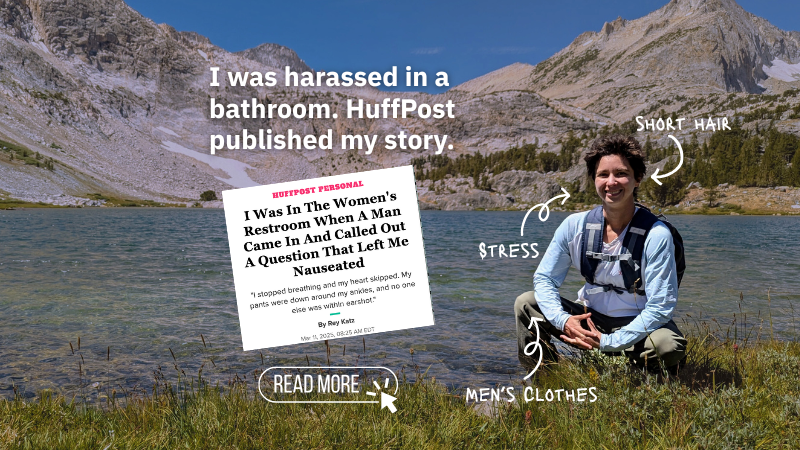
And these comments are not even malicious! I hear this from my friends and acquaintances all the time. "That must have been so scary for you as a woman that a man entered the restroom!"
I'm like, "yeah........well I hope that the story helps people be nicer to other people, especially in the bathroom."
I really do hope that it helps.
I think there's a couple things going on here. First, people don't read. You may think that they are reading your website, but they are not. Understanding this fact about people is crucial for web design. But I digress.
It's been my experience that people are not likely to take me seriously that I am a transmasculine, non-binary person. I get rounded up to "woman" very often.
This is related to my white privilege - being seen as a white woman is a big part of what makes people in bathrooms feel safe around me. Black trans people may be perceived differently particularly by non-Black people.
A woman messaged me regarding my essay, "I sympathize with you, but your situation is flexible; I'm permanently too tall for the ladies room."
This is a fascinating comment which has stuck with me. I think it's so unfortunate that a tall cis woman feels uncomfortable using the women's room - this is a result of transphobia.
My "situation" being "flexible" - this means that I could wear women's clothes and style my hair a particular way and use women's bathrooms with no problem. There's a bit of truth to that. But, I've already tried this - for decades. I was unhappy and unhealthy and in denial about who I am.
I don't want to go back to that.
I don't know how to express this in a way that people will understand, but not being a woman is important to me. Being non-binary and transmasc is important to me. I've been writing these posts weekly for over two years about this importance. I've probably written 100,000 words about being non-binary! That's a lot!
So, to be clear - I'm not a woman.
But I cannot, nor do I wish to, control what you think of me.
Some people transition to having a biologically male sex
To be clear, you do not have to pursue medical transition to be completely valid as a trans masc person! But for those who are on gender-affirming hormone therapy and/or have had gender-affirming surgeries, the physical changes are similarly as profound as those that trans femmes can experience.
BJ Ferguson of Well Beings News posted on LinkedIn, "Last week I had bloodwork done, and I spent like an hour going through the results and translating all the reference ranges from female to male. Because my sex now is not the same sex that I was assigned at birth. Based on my current physiology, especially my hormone levels, the "male" range is more appropriate.... I quite literally successfully changed my 'biological sex' in every way that matters."
Because many people are not aware that trans masc people can transition medically, this is part of trans masc invisibility as well.
By the way, check out BJ's recent article about trans hypervisibility:
 Baxstar Jonmarie Ferguson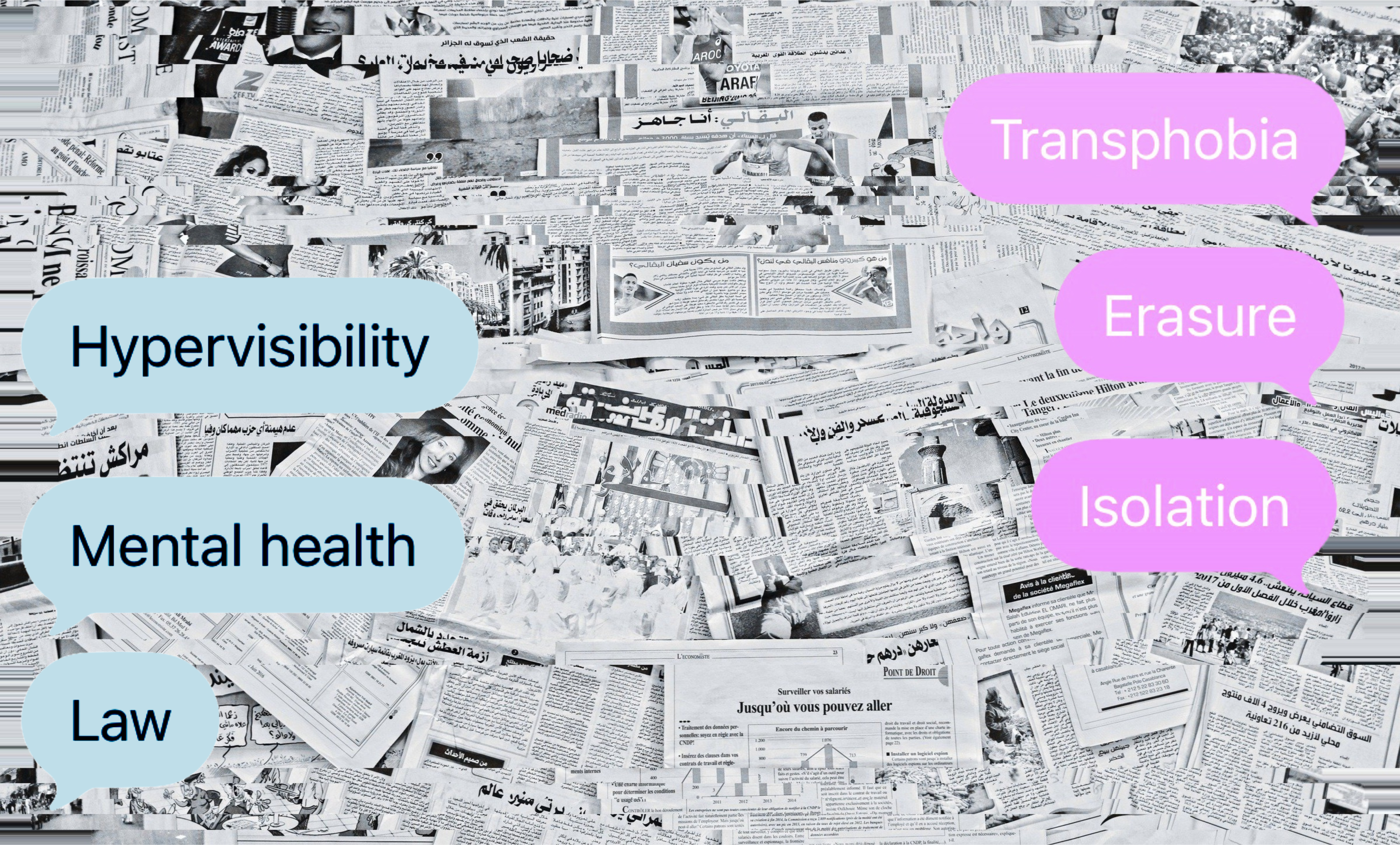
Can trans invisibility help us?
Trans masc invisibility can feel like a safety net, a reassuring way to navigate the world for people whose transness is generally ignored.
Erique Zhang wrote for The Washington Post in 2022, "I think of invisibility, too, as a form of trans care.
How might invisibility allow us to focus our attention on caring for ourselves and living life on our own terms rather than constantly seeking mainstream, cisgender approval?"
I wish that trans people of all genders and appearances had more of this option for invisibility. Of course, it would be even better if trans people of all genders and appearances would feel safe to be out if that was their choice.

Non-binary visibility: Happy publication day for Skylar Lyralen Kaye's Bachelorx: A Nonbinary Memoir!
A fascinating, emotional memoir of relationships and being plural
Skylar Lyralen Kaye’s memoir, Bachelorx, is a touching and entertaining narrative of seeking love and healing. From the long-term partner who remains a part of them to the casual online dates who misgender them to the immensely intense attachment of new love, the queer relationships are highly relatable. Kaye shares their story from the perspective of multiple intriguing characters with non-binary gender identities, introduced by name and indicated by different fonts.
I’ve known a few people who have told me they are plural, a system of people, without sharing further details with me. I really appreciated reading the perspectives from the narrators in a plural system. This was such a gift to be able to experience some part of what that might be like. I feel I gained greater empathy and understanding, and am interested in exploring Internal Family Systems.
As non-binary myself, I really appreciated how Kaye’s memoir expresses their every day life of a non-binary person, from public speaking and activism to deciding whether being misgendered to a friend’s parent would be okay.
I also loved the lyrical, physical scenes out paddleboarding on the ocean, celebrating friendship, and working to heal the self after abuse.
Content note: this memoir discusses child abuse, not graphically.
I highly recommend reading Bachelorx as a compelling non-binary memoir, for the artistry of the writing and to gain a better understanding of what it’s like to be plural.
Amplify Respect is a newsletter to uplift and inform trans folks and allies.
If you find it helpful to learn how to talk about a trans family member, how to promote your work as an LGBTQ+ creator, or how to write about trans people respectfully, you should become a member.
How do you feel about your identity being visible in the world (or not)? Please let us know in the comments!