Trans people are unfortunately in the news often, especially in the US. (The Trans News Initiative data visualization shows how many varied articles are out there.)
And you know, if you're reading this, that prestigious news outlets have been willing to publish wrong information about trans people. I'm not talking about conservative opinions here - I'm talking about actual incorrect facts getting printed in major newspapers.

I recently wrote about independent journalists earning audience trust through fact-checking, for Project C, the research hub, community, and strategic home for creator journalists building independent publications.
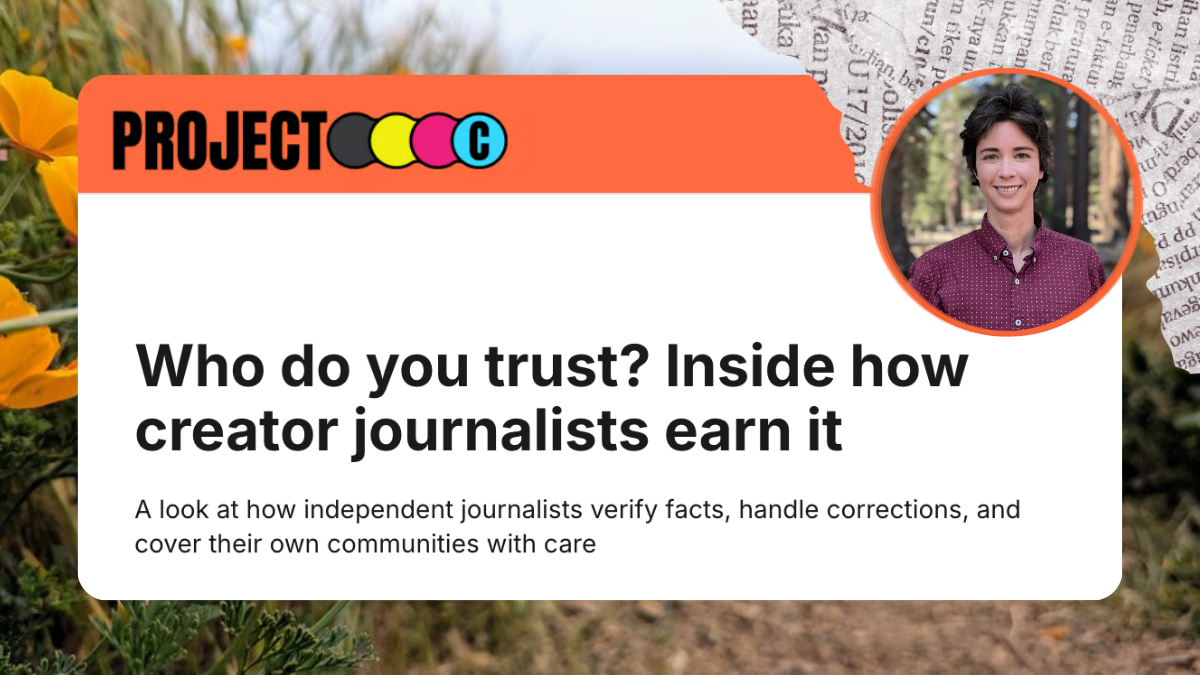
Who do you trust? Inside how creator journalists earn it
As I was writing this piece on how independent journalists can build trust, a question in my mind was, "why is the baseline for our industry so bad when reporting on trans people?"
I was carefully stepping around making the case for LGBTQIA+ people reporting on topics related to our own experiences. I believe many of us find it important to share the true facts of what it's like to be gay or trans. People outside our community don't have a vested interest in showing our humanity.
I trust reporting by trans people on trans people, because I believe them to be more objective.
That's my opinion, but it's also backed up by research.
For example, after the murder of conservative influencer Charlie Kirk, research conducted by the Trans Journalists Association showed that 42 outlets published misinformation, blaming "transgender ideology" for the murder.
 Rey Katz
A trans journalist looks at a headline with the words "transgender ideology" and immediately knows that this is some bullshit, forgive my language.
The next step should be finding references or sources to back up that assertion, and to have the misinformation removed from the article before publication. The community knowledge or gut check is not, itself, a fact. But it is a helpful prerequisite for recognizing what needs to be challenged through fact-checking.
These newspapers should be doing their own fact-checking. It should not take a volunteer team from the Trans Journalists Association to compile all the instances of misinformation. I think more trans people working in newsrooms could help identify such incorrect claims.

Certainly, some independent outlets are in the business of spreading misinformation about LGBTQIA+ people. Being independent doesn't make you reliable.
So I'd encourage you to think critically about who produces journalism and how trustworthy they are. Project C provides guidance for evaluating creators as a reader:
I've appreciated Project C's support for my work since they granted me the opportunity to attend the ONA conference last fall:
 Rey Katz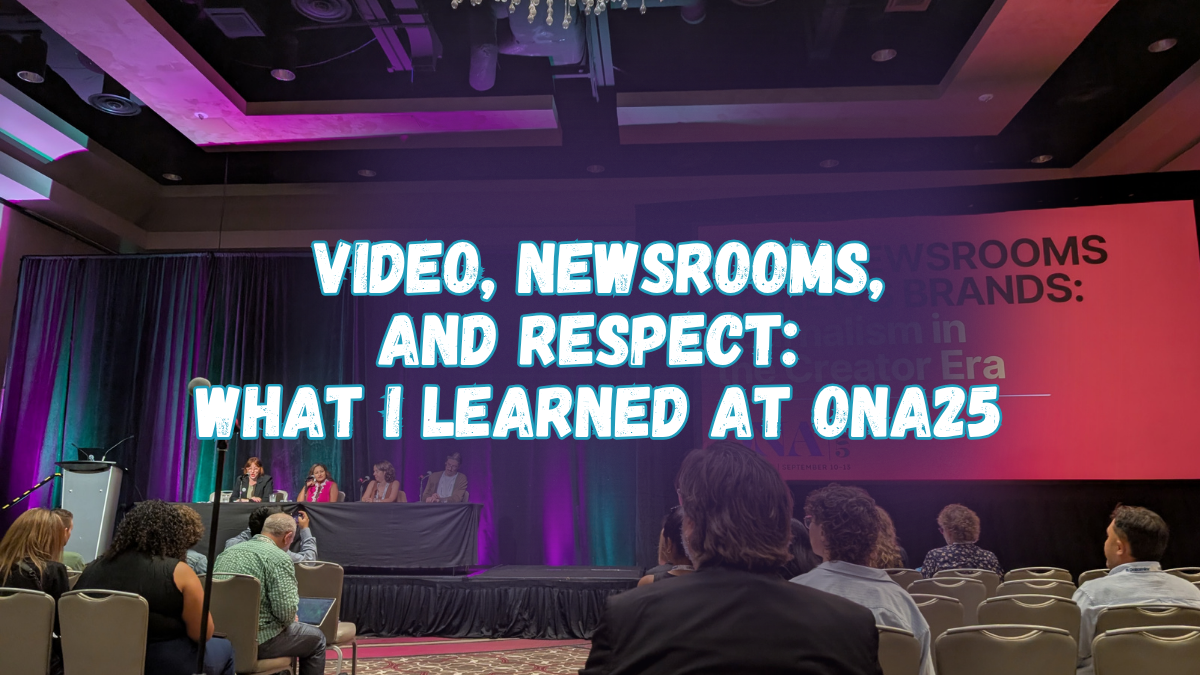
A creator journalist I had the pleasure of meeting at ONA, Rahim Jessani, the founder of Bottom Up Media, recently wrote about how being unbiased is not the goal. "Unbiased" can be unfairly cited as a reason for editors to tell BIPOC journalists they can't write about their own communities. Rather than conforming to discriminatory norms, being open with your audience about your bias is perhaps even more objective.
Jessani wrote, "That transparency matters most when you are the only person of your race, religion, gender, or nationality in the room — the only one making decisions about how a story gets framed. It's why the word "unbiased" lands differently for journalists of color."
Read the full story here:
 Rahim Jessani
Some independent media I trust
TransLash

Erin in the Morning
 Erin Reed
LOOKOUT Arizona
 Geri Koeppel (she/her)
Who do you trust and recommend to report on trans issues? Please let us know in the comments.