I've been working on my speaking voice for years. Today I'm sharing my gender-affirming hormone therapy experience and an exciting collaboration.
--
Renée Yoxon, gender-affirming voice teacher, has helped me so much with voice training for trans and non-binary people. I've known Renée for at least a few years now and their courses and live office hours have really made a difference in my speaking ability and confidence.
I'm thrilled that Renée recently invited me to have a conversation on their Speaking Freely series. We talked about learning to appreciate my voice, gender-affirming hormone therapy, email newsletters, and much more.
If you found me via Renée, welcome! It's so great that you're here.
And if you would like to watch the video or read the blog post, check it out:
Video on YouTube:
Blog post:

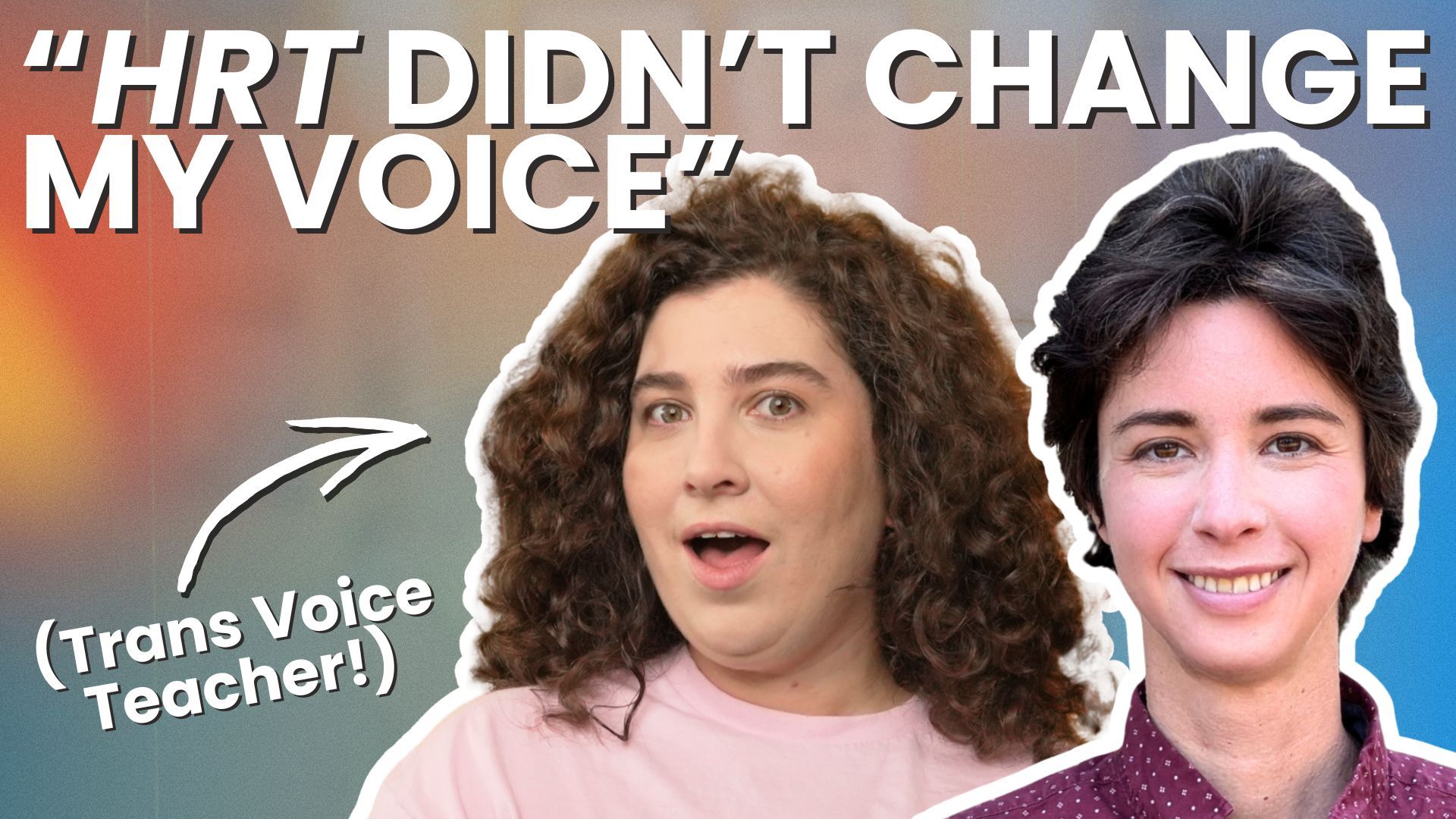
Renée has a great email newsletter sharing trans experiences. Please subscribe to their YouTube channel and newsletter if you are interested!

Amplify Respect needs your help!
Your financial contribution allows this work to continue.
Support the newsletter that helps you find less anxiety and more hope about being trans:
My voice on low-dose T
I started low-dose T mostly because I hoped it would change my voice.
I was scared that I would "destroy" my singing voice, as many transmasc folks are. (I suspect that was a highly irrational fear for me, especially as I am not a professional or serious amateur singer.) Think of all the famous singers who have gone through a testosterone puberty. They can still sing, right?
A lot of singers find they can still sing after gender-affirming hormone therapy as well. For example, check out one of Dylan Holloway's duets with his past self:
I was hoping for a lower speaking voice after starting gender-affirming hormone therapy.
But I didn't really get a deeper voice from hormones!
I found that being on a consistent dose of hormone therapy daily allowed my mood to stabilize and overall was taking less medication for an improved mental state. I was less anxious and depressed.
Perhaps gender-affirming hormone therapy did help me with my speaking voice. Not particularly by changing the pitch, but by helping increase my confidence to come out as myself.
Everyone has hormones - people of various genders have some combination of estrogen, progesterone, and testosterone that affects every body a little differently.
 Rey Katz
It's hard to tell how hormones might affect your body.
I was on medication for years that altered my hormones before I started T. And no one was concerned. I think gender-affirming hormone therapy doesn't have to be this big scary thing.
There's many aspects of my body that I think it would be easier if they were different. I woke up today with pain in my shoulder probably from sleeping on it wrong. Even though it was the same way I slept the night before. Ugh.
My joints don't give me gender dysphoria but, like many things, are affected by my hormones. One of the first things I noticed for my body on T is that my joints felt a little more stable, with slightly increased muscle mass around my hip joints to stabilize them.
I still do stretches and physical therapy exercises for my hip since an injury a few years ago. Sort of like my voice training, I feel the benefits of regular practice and active relaxation for my hip.
Even though my voice often makes me feel dysphoric, I would rather speak out. I have important things I want to share. I'm so glad I exercised the confidence to speak and share my story with you.

What are your hopes and fears about gender-affirming hormone therapy? Let us know in the comments.